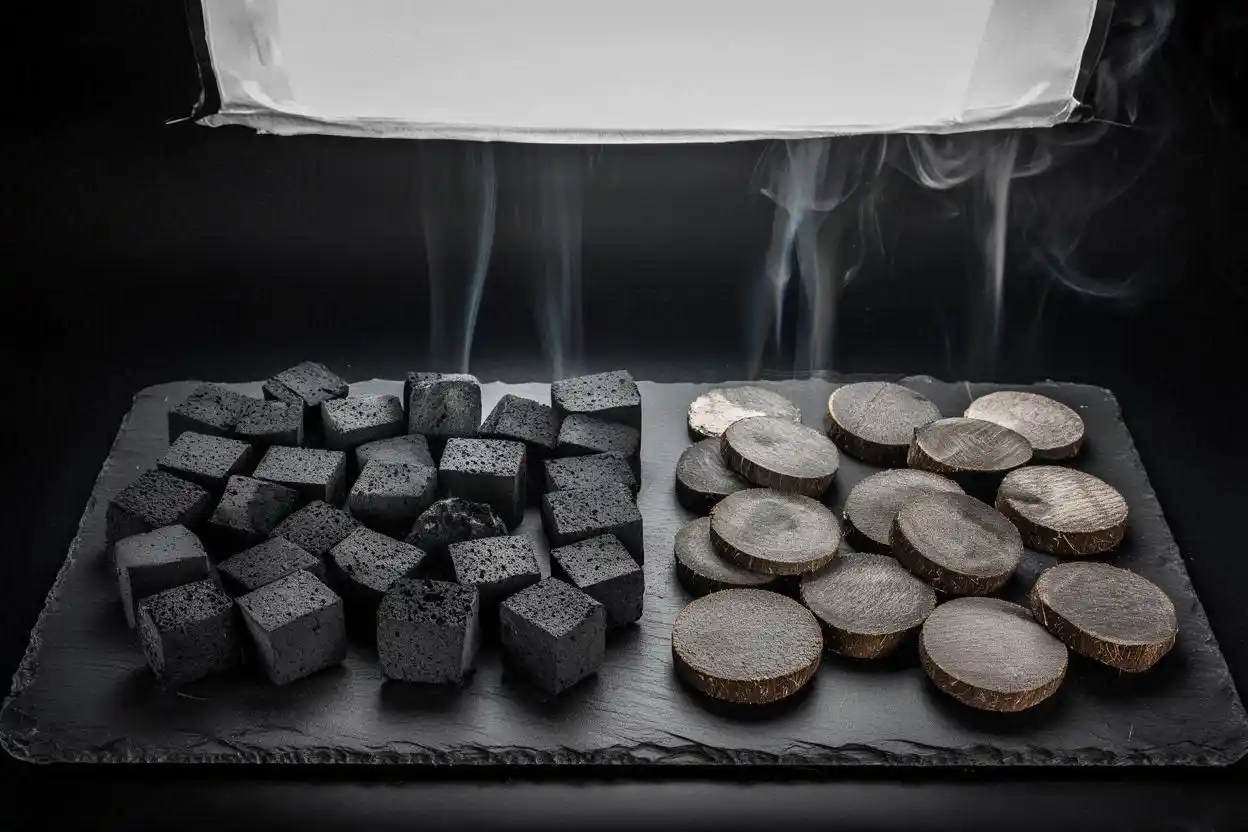
The coconut vs wood charcoal comparison is a topic every smoker and lounge owner should understand. The type of charcoal you choose directly shapes the heat, flavor, and length of your session.
Both options remain widely available in the market today. However, they perform very differently, and knowing those differences helps you make a smarter purchase decision.
Coconut Charcoal vs Wood Charcoal Key Benefits
Coconut shell charcoal comes from the hard shells of coconuts, a byproduct of the coconut processing industry. Manufacturers carbonize the shells at high temperatures to produce dense, long-burning charcoal.
This charcoal type stands out for its clean and odorless burn. It generates consistent heat without releasing unwanted smells, which makes it ideal for preserving the natural flavor of your shisha tobacco.
Key characteristics:
- Burns evenly and lasts 45 to 60 minutes
- Produces very little ash
- No chemical smell or aftertaste
- Made from renewable agricultural waste
Wood Charcoal vs Coconut Charcoal Drawbacks
Wood charcoal, often sold as quick-light charcoal, comes from compressed wood powder mixed with combustible additives. Hookah culture across the Middle East has relied on this charcoal type for decades.
The biggest appeal of wood charcoal is its ease of use. It lights up within seconds using just a match or lighter, making it convenient for users who want a fast setup without extra equipment.
Key characteristics:
- Ignites quickly without a burner
- Burns faster, lasting around 20 to 30 minutes
- Generates more ash during the session
- Carries a faint chemical smell at the start
Coconut vs Wood Charcoal Comparison Full Breakdown
In any serious coconut vs wood charcoal comparison, burn duration is the first factor to examine. Coconut charcoal outlasts wood charcoal by a significant margin, which means fewer interruptions during your session.
Furthermore, coconut charcoal maintains a steadier temperature throughout the session. This consistency stops the tobacco from burning too quickly and keeps the smoke smooth from start to finish.
Wood charcoal heats up fast but drops in intensity sooner. This inconsistency leads to uneven heating and a harsher smoking experience. Beginners especially find heat management with wood charcoal more challenging.
Cost also plays a role here. Wood charcoal costs less per unit, but users burn through more pieces in a single session. Over time, coconut charcoal delivers better value for regular users.
How to Choose the Right Shisha Charcoal
Casual smokers who prefer a quick and easy setup may find wood charcoal more practical. It works well for occasional use at home or outdoors without needing a burner.
Regular users and hookah lounge operators benefit more from switching to coconut shell charcoal. The longer burn, cleaner taste, and lower ash production create a better customer experience and cut cleanup time significantly.
For a deeper look at the differences between coconut and wood hookah charcoal, including technical breakdowns and buyer guides, visit indobriquettescharcoal, which covers a wide range of topics for charcoal buyers and business owners.
Conclusion
The coconut vs wood charcoal comparison ultimately comes down to priorities. If convenience matters most, wood charcoal serves that purpose well. However, if you value heat consistency, flavor purity, longer sessions, and cost efficiency, coconut shell charcoal is the clear winner.
For both personal users and business owners, investing in higher quality charcoal pays off in every session. Coconut charcoal performs better and aligns with growing demand for sustainable products. Making the right choice today leads to a noticeably better hookah experience, and that difference grows more apparent with every use.